When you walk through the streets of Bali, you will see intricate offerings, majestic stone carvings, and delicate batik fabrics. Art is not just a hobby here; it is woven into the very fabric of daily life and religious devotion.
Among these arts, silversmithing holds a special, shimmering place. It is not just a trade; it is a heritage.
At Krisna Silver Class, we teach modern travelers how to make rings and pendants. But we believe it is vital to understand the deep roots of this craft. When you hold a torch in our studio, you are participating in a tradition that dates back centuries.
The "Pande": Masters of Fire and Metal
In the traditional Balinese caste system and social structure, smiths belong to a specific clan known as the Pande.
The Pande were historically revered (and sometimes feared) for their mastery over the elements. They were the only ones who could control fire to transform solid rock and metal into liquid and back again. This was seen as a magical, almost alchemical power.
Because of this, the smith was considered a spiritual figure. Creating a Kris (a ceremonial dagger) or a sacred vessel was not just a technical task; it was a religious ritual involving prayer, fasting, and the selection of auspicious days.
While our workshops are open to everyone today, our local instructors often come from these families of smiths. They carry the muscle memory and the respect for the material that has been passed down from father to son for generations.
The Royal Courts and the Village of Celuk
If you travel about an hour east of Canggu, you will find the village of Celuk. This is the beating heart of Bali's silver industry.
Historically, the artisans of Celuk served the royal courts of Gianyar and Sukawati. They were commissioned to create:
- Royal Jewelry: Elaborate gold and silver headdresses, bracelets, and rings for the King and his family.
- Ceremonial Items: Bowls for holy water (bokor), incense burners, and ritual implements used in temple festivals.
This royal patronage demanded the highest level of craftsmanship. It gave rise to the distinct "Balinese Style" of silverware, characterized by:
- Jawan (Granulation): The painstaking application of tiny silver spheres to create texture and pattern.
- Bun (Filigree): Delicate, lace-like threads of silver wire twisted and soldered into floral and geometric shapes.
Walking through Celuk today is like walking through a living museum. Almost every house is a workshop, with the rhythmic tap-tap-tap of hammers echoing down the streets.
Modern Silversmithing: Evolution in Canggu
As Bali opened up to the world, the art of silversmithing evolved. The 1970s and 80s saw an influx of international designers who collaborated with local smiths, blending Western aesthetics with Balinese techniques.
Canggu represents the new wave of this evolution. Here, the style is often more contemporary, minimalist, and organic. But the foundation remains the same.
At Krisna Silver Class, we bridge these two worlds.
- The Technique is Traditional: We use the same hand tools—saws, files, manual rollers, and torches—that have been used for decades. We reject mass production and casting machines in favor of hand-fabrication.
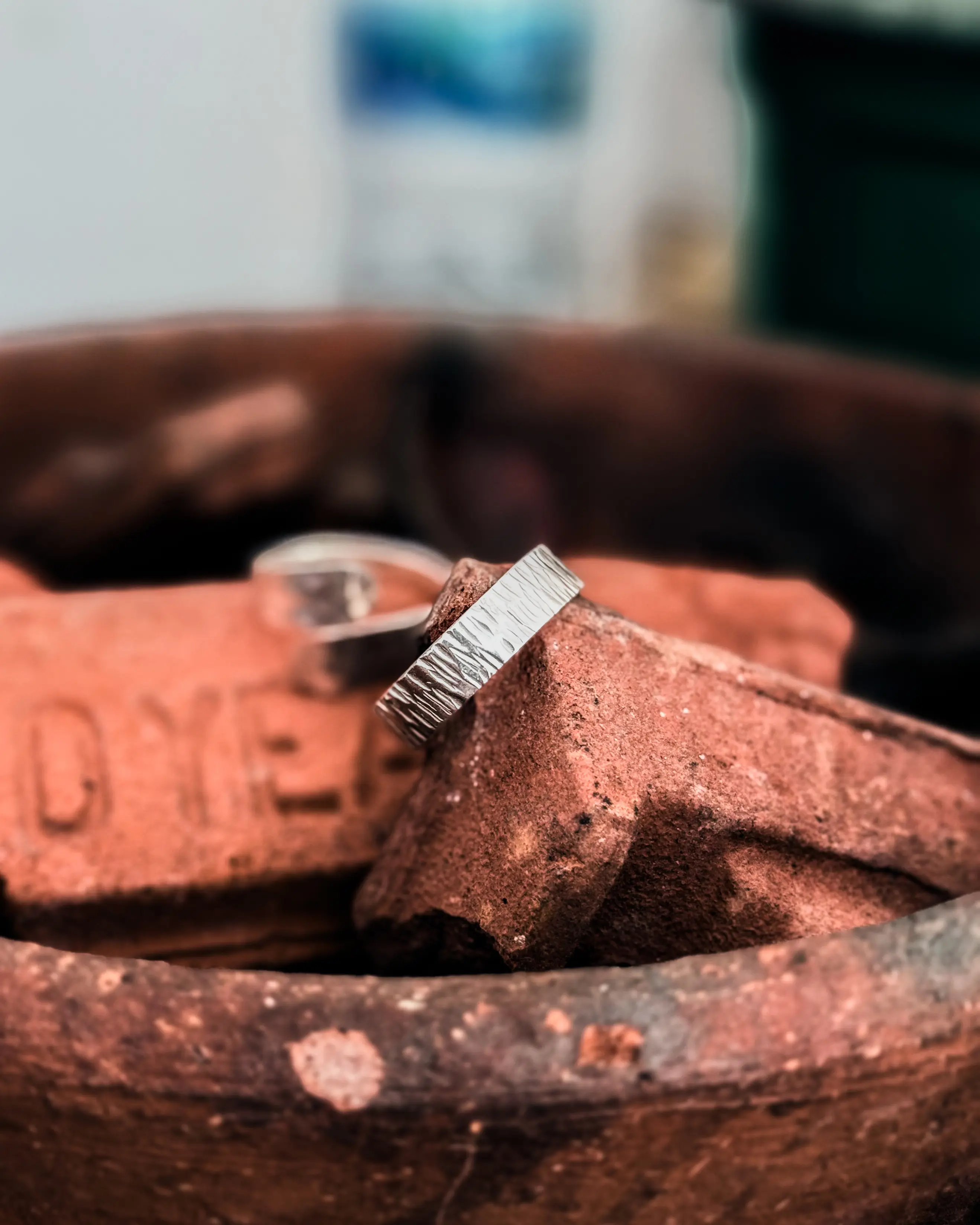
- The Design is Personal: We encourage students to express their own style, whether that's a classic hammered band or a modern geometric shape.
The Spiritual Act of Creation
In Hindu Balinese philosophy, the concept of Taksu is central to art. Taksu translates roughly to "spiritual charisma" or "divine inspiration." It is what makes a dancer's performance mesmerizing or a mask feel "alive."
We believe that crafting jewelry can also have Taksu.
The process requires mindfulness. You cannot rush silver. You must respect its melting point, its hardness, and its limits. This demands a state of calm focus. In this way, the act of making jewelry becomes a meditation—a way to center oneself.
We encourage our students to pour positive energy into their creations. When you make a ring for a loved one, you are literally hammering your intention and love into the metal. That is the true value of handmade jewelry.
Preserving the Legacy
By taking a class, you are helping to keep this tradition alive. In an era of 3D printing and factory automation, the number of young people wanting to learn traditional hand-skills is dwindling.
Your interest and patronage show that there is still value in the "slow way" of doing things. It supports the local economy and encourages the next generation of Balinese artisans to continue their heritage.
Come and connect with the culture. Experience the magic of the Pande and create your own piece of history at our studio.
Book Your Cultural Experience Here
Copyright © 2024 Krisna Silver Class. All rights reserved.