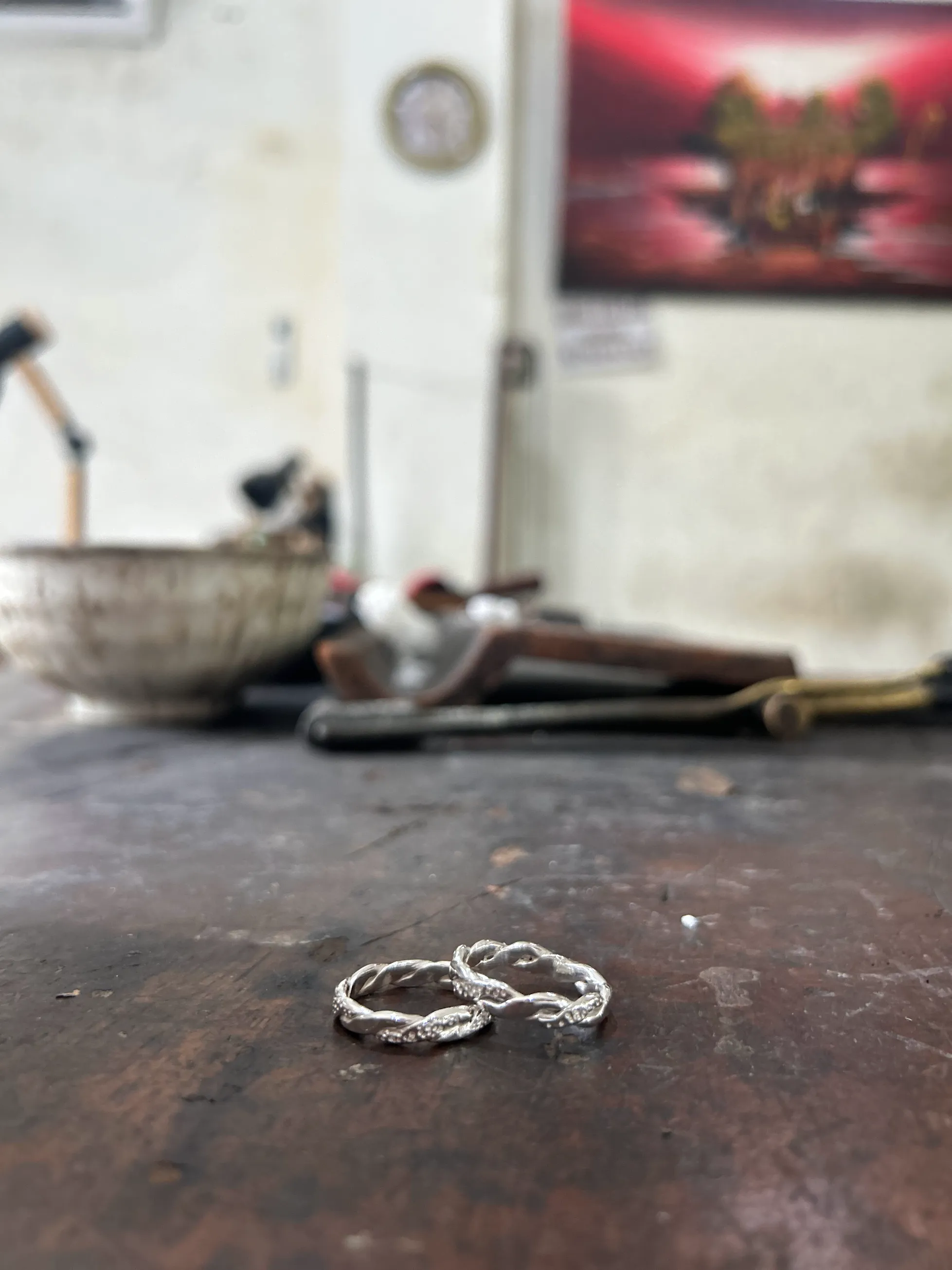
Choosing your silver class design in Canggu starts with your experience, your personal style, and the workshop format you prefer. From there, compare design categories, ring sizing, pendant shapes, and earring styles so you can book with confidence.
At our open-air studio in Canggu, you'll work next to local silversmiths and make a sterling silver piece from scratch. Honestly, most people overthink this first decision. Solo traveler, couple, or family, the first call is what to make: a ring, a pendant, or a pair of earrings. Each option has a different learning curve, time commitment, and amount of creative freedom. Here's how to settle on the right design.
Design Categories: Ring, Pendant, or Earrings
You've got three main options: rings, pendants, and earrings.
- Rings are the most popular option. You choose band width, texture, and an optional stone setting. Rings need sizing, so you'll measure your finger early in the session.
- Pendants work well for beginners. No sizing to worry about, and you can cut geometric or organic shapes or add stamped letters and symbols.
- Earrings are a fun way to end up with a matched pair. You can make studs, small hoops, or drops. Posts and hooks are provided, so you focus on the decorative piece.
If you're really not sure, go with a pendant. I'd pick that before a ring or earrings. Rings and earrings add a few extra steps, but they're still very doable for first-timers.
Step-by-Step: How to Choose Your Silver Class Design in Canggu
Use these four factors to make a confident decision before you book.
Assess Your Experience and Comfort Level
You don't need any silversmithing experience for these designs. That said, some pieces involve more sawing, filing, and soldering than others. If you've never worked with metal, a simple band ring or a flat pendant with stamped details is the easiest entry point. If you're used to hand tools or have taken a jewelry class before, go for a wider band, a stone setting, or a more involved earring shape.
Consider Your Personal Style and Daily Wear
Think about what you actually enjoy wearing. A custom ring makes sense if rings are part of your daily rotation, and you'll get a lot of use out of it. If necklaces are more your thing, a pendant on a chain layers easily with other pieces. Regular earring wearers will enjoy making a pair they can show off right away. Pick a design that fits the wardrobe you already have, not just whatever looks good in the moment.
Factor in Workshop Format and Time
Your design should fit the session format. A short individual workshop usually works best with a pendant or slim ring. A longer couple or family session gives you more time for detailed work. Group workshops tend to move at a shared pace, so simpler designs keep everyone together. If you book a private class, you have more room to try something intricate.
Decide on Metal: Sterling Silver or Brass
Most silver classes in Canggu use sterling silver. It's durable, hypoallergenic, and has a bright finish. Some workshops also offer brass as a cheaper alternative or practice metal. Brass has a warm golden tone and shapes easily, but it tarnishes faster and can irritate sensitive skin. If you want something that lasts, sterling silver is the standard choice. If you're on a tight budget or just want to experiment, a brass workshop is worth a look.
Design Comparison Table
Here's a quick comparison of the common designs.
| Design Type | Difficulty | Time Commitment | Customization Level | Best For | |-------------|------------|-----------------|---------------------|----------| | Simple ring (slim band) | Beginner-friendly | Shorter | Medium (width, texture) | Solo travelers, first-timers | | Wide or textured ring | Moderate | Longer | High (stamps, stones, shape) | Couples, experienced makers | | Pendant (flat, stamped) | Beginner-friendly | Shorter | High (shape, letters, patterns) | Families, quick sessions | | Earrings (studs or drops) | Moderate | Medium | Medium (size, texture, shape) | Groups, gift-making | | Brass piece (any design) | Beginner-friendly | Shorter | Medium | Budget-conscious, practice |
Note: Time commitment and difficulty are general guidelines. Your instructor will adjust the pace to your skill level.
Ring Design Details: Choosing Your Perfect Band
Rings are the most requested design at our Canggu workshop. When you're choosing a ring, think about band width, texture, stone setting, and shape. A slim 2–3 mm band is elegant and easy to make. A wider 5–8 mm band gives you more room for hammered textures or stamping. You can leave the silver smooth, hammer it for a faceted look, or brush it with sandpaper. Some workshops offer a simple bezel setting for a small cabochon stone. That adds time and difficulty but gives the ring a focal point. Flat bands are classic. Slightly curved or organic bands follow the finger more naturally but need more shaping.
If you're booking a single silver class, a slim textured band is a satisfying project you can complete in a standard session.
Pendant Design Details: Shape and Personalization
Pendants make sense if you don't want to deal with sizing. Consider the shape, bail, stamping, and finish. Circles, ovals, triangles, and freeform shapes are all doable by sawing a silver sheet. Geometric shapes are easier to cut cleanly. The bail is the small loop that connects the pendant to a chain. You can fold one from silver or solder a pre-made bail. Letter stamps, numbers, and small symbols let you add initials, dates, or a short word. That personal touch is popular with couples and families. For the finish, you can polish to a high shine, add a matte texture, or oxidize the silver for an antique look.
A pendant works well in a family silver class because each person can choose a different shape and personalize it without needing to match a size.
Earring Design Details: Studs, Hoops, and Drops
Earrings let you create a wearable pair in a single session. Studs are small shapes like circles, squares, or hearts soldered onto posts. They're quick, easy, and you can add a tiny stone or surface texture. Small hoops start as silver wire formed into a circle and finished with an ear wire. They're lightweight and simple. Drop earrings have a decorative element hanging from a hook. You can combine shapes, add a bead, or make a hammered teardrop.
Earrings are a fun choice for a group silver class because everyone works on small, manageable pieces and can compare designs at the end.
Designing for Your Group: Couples, Families, and Friends
Your workshop format can shape the design you pick. Couples often go for matching or complementary rings. A couple silver class gives you time to size each other's fingers and add a shared stamp like a date or initials. Families do best with pendants or simple rings so all ages can join in. In a family silver class, each person picks a shape and works at their own pace. Groups usually move efficiently with earrings or slim bands because the steps repeat and are easy to demonstrate. A group silver class works well for birthdays, team outings, or friend trips.
Alternative: Brass Jewelry Workshop
If you want to practice before investing in silver, or you just like warm-toned metal, look at a brass jewelry workshop. Brass is softer than sterling silver, so sawing and filing go faster. The design process is almost the same, and plenty of people make a pendant or ring in brass as a low-pressure first run. After that, you'll feel ready to book a silver class for your next piece.
Frequently Asked Questions
What is the easiest silver design for a beginner?
A flat pendant with stamped details or a slim band ring. Both use straight saw cuts, basic filing, and simple soldering. Earrings with pre-made posts are also quick and forgiving.
Can I choose my design on the day of the class?
Yes, you can decide when you arrive. Your instructor will show you samples and walk through each option. If you have a specific complex design in mind, mention it ahead of time so extra materials can be ready.
How long does a typical silver class in Canggu take?
Most classes run 1.5 to 3 hours, depending on the design and group size. A simple pendant can take less time. A wide ring with a stone setting will take longer.
Do I need to bring my own design ideas?
No, you don't need to bring a design. The workshop provides templates, samples, and guidance. If you have a sketch or photo of something you like, bring it along. The instructor can help you adapt it to the available techniques.
Can children participate in a silver class?
Yes, many family workshops welcome children, usually ages 8 and up with adult supervision. Simpler designs like stamped pendants or slim rings work best for younger participants. Check the family workshop details before booking.
What is the difference between sterling silver and brass classes?
Sterling silver is a precious metal that's brighter, more durable, and hypoallergenic. Brass is an alloy of copper and zinc with a golden color. It's softer to work and less expensive. The techniques are similar, but the finished piece and cost are quite different.
Ready to Choose Your Design?
Choosing your silver class design in Canggu doesn't need to feel overwhelming. Start with the piece you'll actually wear, then match it to your skill level and session length. A simple ring, a stamped pendant, or a pair of stud earrings are all solid first projects.
Once you have an idea, book a silver class and get ready to make something with your own hands. Your instructor will walk you through every step, from raw silver sheet to a finished piece you'll be happy to wear home.