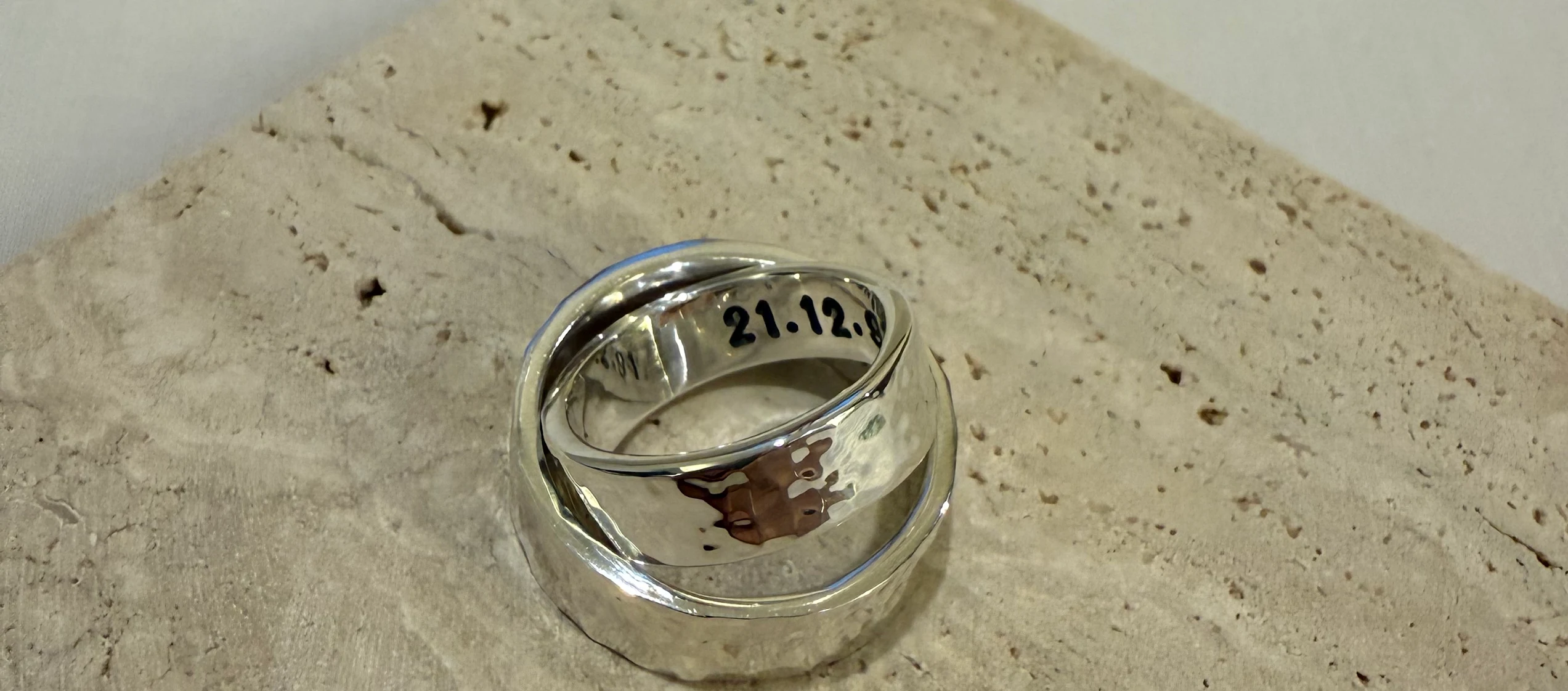
Annealing and soldering show up early in any silversmith's life. Honestly, the two get confused all the time. Annealing softens hardened metal so you can bend, hammer, or shape it without cracking. Soldering joins separate pieces of metal using a lower-melting alloy called solder. At Krisna Silver Class in Canggu, you practice both skills with local silversmiths before making your own sterling-silver ring, pendant, or earrings.
Annealing and Soldering Explained for Beginners: Core Concepts
Jewelry making often starts with simple sheet or wire. But as you work, the metal gets harder and more brittle. That is work-hardening. Annealing reverses it. Soldering connects parts. Both use a torch, but they do opposite jobs, and knowing the difference tells you when to reach for the flame.
What Is Annealing?
Annealing is a heat treatment that softens metal. Bend, hammer, or roll sterling silver, and its crystal structure deforms. Dislocations pile up, the metal gets stiff, and it starts to crack if you keep going. Heating the metal to a specific temperature and quenching it lets the crystals recrystallize and restores softness. In a beginner silver class, you anneal silver before shaping a ring band or before hammering a textured piece further.
What Is Soldering?
Soldering uses a lower-melting filler metal, called solder, to join two pieces of silver. You apply flux to prevent oxidation, set small pieces of solder along the seam, and heat the whole joint until the solder melts. It flows into the gap by capillary action. The result is a permanent bond. Unlike welding, soldering does not melt the base metal.
Annealing vs. Soldering: Key Differences at a Glance
| Feature | Annealing | Soldering | |---------|-----------|-----------| | Main purpose | Soften metal for shaping | Join two or more pieces | | Metal state during process | Solid, heated to dull red | Base metal stays solid; solder melts | | Temperature | Around 1100–1200°F (600–650°C) for sterling silver | Solder melts at 1200–1450°F (650–790°C), depending on grade | | Result | Softer, more malleable metal | Permanent, strong joint | | Common tools | Torch, quenching bowl, pickle | Torch, flux, solder, pickle |
How Annealing Works Step by Step (Beginner Friendly)
- Mark the silver with a permanent marker or a heat-sensitive marker.
- Hold the piece with tweezers and heat it evenly with a soft, bushy flame.
- Watch the marker. When it disappears, the metal has reached annealing temperature.
- Quench the hot metal in water right away.
- Place it in a pickle solution (a mild acid) to remove fire scale, then rinse and dry.
Safety tip: Always wear safety glasses and keep your torch aimed away from your body. In a workshop, an instructor will guide your first attempt.
How Soldering Works Step by Step (Beginner Friendly)
- Make sure the two surfaces fit tightly together. Gaps wider than a sheet of paper are hard to fill.
- Clean the joint area with sandpaper or a file to remove oxides.
- Apply flux to both surfaces with a small brush.
- Cut tiny pieces of solder and place them along the joint.
- Heat the entire piece evenly, not just the solder, until the solder melts and flows into the seam.
- Remove the flame, let the piece cool slightly, then quench and pickle.
Important: Move the torch in small circles to heat the whole joint. If you heat only the solder, it may ball up and not flow.
Common Beginner Mistakes (and How to Avoid Them)
- Overheating the metal can cause pitting or even melt thin silver. Heat just until the solder flows or the marker disappears.
- Using too little flux lets oxidation form, and solder will not flow. Apply a thin, even coat.
- Solder pieces can shift when you start the flame. Use small chips and a gentle flame, or hold them in place with a pick.
- Solder hates dirt and oil, so clean the joint thoroughly before fluxing.
- Skipping the pickle leaves fire scale on the surface and makes finishing harder. Pickle removes oxidation.
- Let the piece cool for a few seconds after soldering before you quench. Quenching too soon can cause thermal shock.
These are not exotic failures. Almost everyone does at least one of these on the first try.
Why Learn Annealing and Soldering in a Hands-On Workshop
Reading about these techniques is one thing. Doing them under supervision is another. At Krisna Silver Class in Canggu, you get a bench, a torch, and one-on-one time with an experienced silversmith. You can book a silver class that fits your schedule, whether that is a single silver class, a longer couple silver class, or a family silver class. For a lower-cost introduction, the brass jewelry workshop lets you practice annealing and soldering on a more forgiving metal before moving to sterling silver.
Frequently Asked Questions
Is annealing the same as soldering?
No. Annealing softens a single piece of metal so you can shape it without cracking. Soldering joins two or more pieces with a filler metal that melts at a lower temperature.
Can I learn annealing and soldering at home without experience?
You can, but a torch and pickle solution carry real risks. A beginner workshop gives you safety equipment, proper ventilation, and an instructor who can correct your technique before bad habits set in.
Do I need to know annealing and soldering to make a simple silver ring?
Most rings require both. You anneal silver wire or sheet so it is soft enough to bend into a ring, then solder the ends together to close the band.
What torch is used in beginner silver classes?
Most beginner classes use a small butane or propane torch with a focused flame. These torches are easy to control and put out enough heat for annealing and soldering small silver pieces.
How long does it take to get comfortable with annealing and soldering?
Most beginners can do a basic anneal and a simple solder joint after one class. Consistent heat control and clean joints come with practice over several projects.
Is soldering safe for beginners?
Yes, if you follow the right precautions. A workshop provides safety glasses, heat-resistant surfaces, and ventilation. You learn how to handle the torch, flux, and pickle safely.
Conclusion
Annealing and soldering are not mysterious skills. They are practical, repeatable steps every silversmith uses. Once you understand the difference, you can shape and join silver with confidence. The best way to internalize these techniques is with a torch in your hand and a patient teacher beside you.
Book your silver class today and make your first piece of sterling-silver jewelry in Canggu.